 By Graham Fisher
Updated November 2026
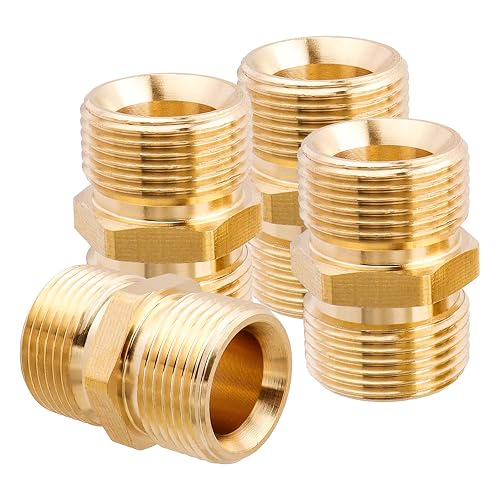
A pressure washer hose converter is a short adapter that joins two fittings that don’t match, such as a garden hose thread on one end and a pressure washer quick-connect on the other. This guide shows you how to identify the fittings you have, pick the right converter, and connect it so it holds pressure without leaking. The whole process takes about ten minutes once you know what to look for.
Identify the fittings before you buy
Most converter problems come from buying the wrong part. Check both ends of your equipment before ordering anything.
Shopping for one? See our guide: 7 Best Pressure Washers for Water Hose Options Compared (2026).
- Look at the pressure washer inlet. Many units use a quick-connect or a threaded fitting with a female thread, often sized for standard garden hose threads.
- Look at the hose or accessory you want to connect. Note whether it is male or female, and whether it uses a clamp, a sleeve or a threaded collar.
- Measure the thread diameter with a caliper or a tape measure across the outer thread. Standard garden hose thread is 3/4 inch, but many pressure washer fittings differ.
- Note the thread pitch if the fitting is threaded and not a quick-connect. Threads that look identical can still be different.
Choose the right type of converter
Converters come in several forms, and each solves a different problem. Match the converter to the connection rather than the brand name on the box.
| Connection type | Converter to look for |
|---|---|
| Garden hose thread to quick-connect | Threaded adapter with a quick-connect outlet |
| Quick-connect to quick-connect (different style) | Quick-connect to quick-connect adapter |
| Male to male or female to female | Gender-changer or coupler |
| Threaded fitting with a different pitch | Thread-size adapter matched to both pitches |
Manufacturers usually specify the fitting type in their manuals. If you are replacing a lost or damaged part, check the parts list for your model before buying a generic adapter. For model-specific fittings, the guide to Pressure Washer Hose Couplings: How to Choose, Fit and Fix Leaks explains the common quick-connect styles in more detail.
Connect the converter step by step
Once you have the correct converter, connect it in this order to reduce the chance of a leak.
- Turn off the pressure washer and disconnect the power or fuel supply. Relieve any stored pressure by squeezing the spray gun trigger until the water stops.
- Thread the converter onto the water source, such as the garden hose, and hand-tighten it.
- Attach the other end of the converter to the pressure washer inlet. Push or screw it until it seats fully.
- Add a rubber washer or O-ring if the fitting uses one and it is missing or cracked. A dry washer is the most common cause of drips at threaded joints.
- Turn on the water supply slowly and check every joint for drips before you start the engine or motor.
If you are also replacing the hose itself, the notes in Pressure Washer Hose Connections: A Step-by-Step Guide to Fit and Seal cover sealing and fitting orientation in more depth.
Check for leaks and pressure loss
A small leak at a converter often looks harmless but can drop the flow enough to starve the pump. Run the washer for about 30 seconds with the trigger held open and watch each joint. Any wet spot or drip means the fitting needs tightening, a new washer, or a different converter. Persistent pressure loss can also come from other parts of the system, so if the spray stays weak after the joints are sealed, look at the unloader and pump as well.
Common mistakes
- Buying a converter by size alone without checking thread pitch or fitting style.
- Overtightening threaded fittings, which can crack plastic or deform the washer.
- Stacking several converters in a row, which adds more joints that can leak and reduces flow.
- Reusing a cracked or flattened washer because it still looks round.
- Connecting the converter while the water is on and the pressure is still stored in the lines.
Recommended gear
- Replacement rubber washers and O-rings: cheap, easy to swap, and the most common fix for a dripping joint. View on Amazon
- Garden hose quick-connect adapter set: useful when your water source and washer use different fitting styles. View on Amazon
- Thread-size adapter kit: helpful when you need to match two threaded fittings with different sizes. View on Amazon
FAQ
Can I use a garden hose converter on any pressure washer?
Not always. Many pressure washers use quick-connect fittings or specific thread sizes that a standard garden hose converter will not match. Check your model’s inlet type before buying.
Will a converter reduce water pressure?
A properly sized converter should have little effect, but each extra joint adds a possible restriction. Use one converter where possible and avoid stacking several.
How do I know if the converter is the cause of a leak?
Dry the fitting, run the washer briefly, and watch the joint. If the drip starts at the converter connection, the washer is worn or the fitting is not fully seated.
Conclusion
A pressure washer hose converter solves a simple fitting mismatch, but only if you buy the right type and seat it properly. Identify both ends first, check the washer, and test for leaks before full pressure. For safety-related questions or persistent problems, consult the manufacturer or a qualified repair technician.
Related reading
- Pressure Washer Hose Reel: A Step-by-Step Guide to Choosing and Using One
- Pressure Washer Hose Attachments: A Practical Guide (2026)
- Pressure Hose for Power Washer: 5 Best Picks Compared (2026)
- Hose Pipe for Pressure Washer: How to Choose the Right One (2026)
- Why Does My Gas Pressure Power Washer Lose Pressure? 6 Causes and Fixes
Ready to choose one?
About Graham Fisher
Graham Fisher is part of our editorial team and reviews and edits our non-vacuum cleaning gear guides, checking product details against manufacturer specifications and owner feedback.









Write Your Review
No reviews yet. Be the first to share your experience!