 By Graham Fisher
Updated November 2026
A pressure washer hose adaptor lets you connect your garden hose, pressure hose or accessory to a machine whose fittings don’t match. Getting the right one means checking thread size, thread type and the gender of each end, then connecting it snugly so water doesn’t leak under pressure. This guide walks you through identifying what you need and making a secure connection.
Identify the Fittings You Need to Connect
Start by looking at the two ends you want to join. Most US pressure washers use a quick-connect or threaded inlet on the pump side and a threaded outlet on the spray wand side. Garden hoses usually use standard garden hose threads, which are ¾-inch National Hose Thread (GHT). Many pressure washer hoses use M22 metric threads or ¼-inch quick-connect couplers, so the mismatch is common.
Shopping for one? See our guide: 7 Best Pressure Washers for Water Hose Options Compared (2026).
Before buying anything, note three details for each end:
- Thread size, such as ¾-inch GHT or M22 x 1.5
- Thread type, such as male or female, and whether it is threaded or a quick-connect style
- Connection style, such as a flat rubber washer seal or a cone-seat fitting
Your machine’s manual or the fitting markings usually list these values. If you can’t find them, measure the outside diameter of a male thread with calipers or a ruler and compare it against a thread chart.
Choose the Right Adaptor Type
Adaptors come in several common forms, and the right one depends on your connection:
| Adaptor type | Typical use |
|---|---|
| Garden hose to pressure washer inlet | Feeds water from a spigot into the pump |
| Quick-connect to threaded | Joins a quick-connect hose to a threaded wand or pump |
| Metric to standard thread | Bridges M22 fittings and ¾-inch GHT hardware |
| Brass or stainless | Better durability and corrosion resistance than plastic |
Metal adaptors generally hold up better under repeated pressure and temperature swings. Plastic versions are fine for light use but can crack if overtightened.
Connect the Adaptor Step by Step
Once you have the correct adaptor, connect it carefully to avoid leaks and damaged threads:
- Turn off the water supply and the pressure washer engine or motor, then relieve any pressure by squeezing the trigger on the wand.
- Inspect the rubber washers or O-rings on both ends. Replace any that are cracked, flattened or missing.
- Thread the adaptor onto the first fitting by hand so it starts straight. Cross-threading ruins the connection.
- Tighten by hand first, then use a wrench for a final quarter to half turn. Stop once the seal is compressed.
- Connect the rest of the assembly, then turn the water on slowly and check each joint for drips before starting the engine.
If a joint leaks after tightening, shut the water off and check the washer seating before adding more torque. Overtightening often cracks the adaptor or deforms the seal.
Common Mistakes to Avoid
- Assuming all ¾-inch fittings are the same. Garden hose threads and some pressure washer threads look alike but do not always mate.
- Using plastic adaptors on high-pressure connections without checking the rated pressure in the manufacturer’s specifications.
- Skipping the washer replacement. A worn washer is the most common cause of leaks.
- Running the pump dry. Make sure water is flowing before the engine starts.
- Stacking too many adaptors. Each extra joint adds a leak point and reduces flow.
Recommended gear
A basic set of hose washers and a fitting kit can cover most replacement needs. Check that the kit lists the thread sizes you need.
- Pressure washer hose washer kit, useful for replacing worn seals at each coupling: View on Amazon
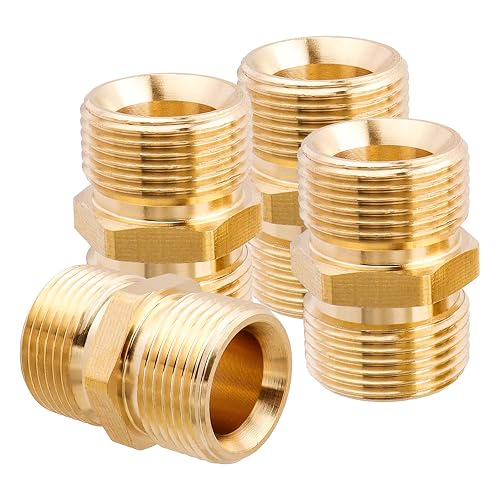
- Brass garden hose to pressure washer adaptor, a sturdier option for connecting a standard spigot to the pump inlet: View on Amazon
- Pressure washer quick-connect adaptor set, handy if your machine and accessories use different coupler styles: View on Amazon
For more on matching hose parts to your machine, see Pressure Washer Hose Connections: A Step-by-Step Guide to Fit and Seal and Pressure Washer Hose Couplings: How to Choose, Fit and Fix Leaks.
FAQ
Can I use a garden hose adaptor on any pressure washer?
Not always. Many pressure washers have a dedicated inlet thread, and a garden hose adaptor only works if its thread matches that inlet. Check your manual or the inlet markings before buying.
Why does my adaptor leak even after tightening?
The most common cause is a worn, flattened or missing washer. Replace the washer, reseat the fitting and tighten gently. If it still leaks, the threads may be damaged.
Do I need a brass adaptor or is plastic fine?
Plastic works for light, occasional use, but brass or stainless steel handles pressure and repeated connections better. For a machine you use often, metal is the safer choice. Consult the manufacturer’s specifications for pressure ratings.
Conclusion
A correct pressure washer hose adaptor depends on matching thread size, thread type and seal style at both ends. Confirm those details first, replace worn washers and tighten by hand before adding a wrench turn. Checking each joint before running the machine will prevent most leaks.
Related reading
- Pressure Washer Hose Reel: A Step-by-Step Guide to Choosing and Using One
- Pressure Washer Hose Attachments: A Practical Guide (2026)
- Pressure Hose for Power Washer: 5 Best Picks Compared (2026)
- Hose Pipe for Pressure Washer: How to Choose the Right One (2026)
- Why Does My Gas Pressure Power Washer Lose Pressure? 6 Causes and Fixes
- Water Pressure Washer Repair: A Step-by-Step Guide to Fixing Common Faults
Ready to choose one?
About Graham Fisher
Graham Fisher is part of our editorial team and reviews and edits our non-vacuum cleaning gear guides, checking product details against manufacturer specifications and owner feedback.



Write Your Review
No reviews yet. Be the first to share your experience!