 By Graham Fisher
Updated November 2026
The O Cedar spin mop & bucket system is a practical choice for households that want a wet mopping setup without wringing a dripping mop by hand. This review covers the RinseClean model, which is built for people who mop hard floors regularly and want a two-chamber bucket that keeps dirty water separate from clean rinse water. It suits busy families, pet owners dealing with tracked-in dirt, and anyone who finds traditional string mops messy. It is less suitable for people who need to mop large commercial spaces, those with heavy carpet needs, or anyone expecting a cordless, automated solution. The rest of this review explains what you get, how it performs based on specifications and owner feedback patterns, and how to decide whether it fits your floors. You may also like Easywring Spin Mop & Bucket System Review: Is It Worth It?.

O-Cedar RinseClean Spin Mop and Bucket System, 2 Extra Mop Heads, Removes 99% of Bacteria, Microfiber, Standard
Product Overview
This is the O-Cedar RinseClean Spin Mop and Bucket System, sold as a standard kit that includes the mop, a bucket, and two extra mop heads. The listing describes it as using microfiber and states that it removes 99% of bacteria, a claim you should read as the manufacturer’s own marketing language rather than an independent result. The system is designed around a spin mechanism: you press a foot pedal on the bucket, the mop head spins inside a basket, and water is pressed out of the microfiber before you return to the floor.
The RinseClean name refers to the bucket design. The bucket has two compartments, one for clean water and one for dirty water. The mop head is rinsed in the clean side, then spun dry in the basket, which is meant to reduce the amount of dirty water carried back onto the floor. This separation is the main functional difference between RinseClean and simpler single-bucket spin mops.
The system is intended for sealed hard floors such as vinyl, tile, laminate, and sealed hardwood. It is not designed for carpet. Owners generally use it for routine maintenance mopping rather than heavy scrubbing of set-in stains.
Key Features & Specifications
The table below lists the specifications the product name and standard manufacturer descriptions support. Where exact measurements vary by batch or retailer listing, we have left them out rather than guess.
| Feature | Details |
|---|---|
| Product type | Spin mop and bucket system (RinseClean design) |
| Bucket design | Two-compartment bucket with separate clean and dirty water sections |
| Spin mechanism | Foot-pedal activated spin basket for wringing the mop head |
| Mop head material | Microfiber |
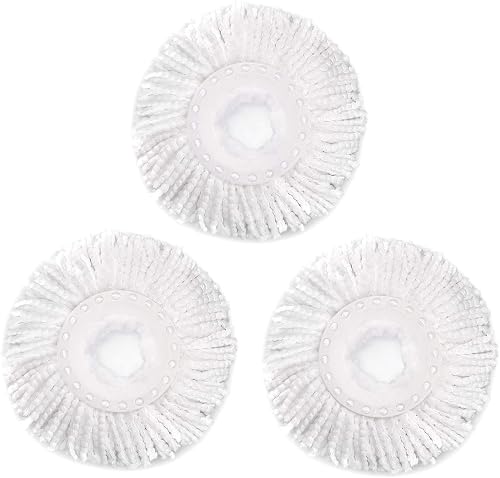
| Included extras | Two extra mop heads |
| Antibacterial claim | Listed as removing 99% of bacteria (manufacturer claim) |
| Recommended surfaces | Sealed hard floors such as vinyl, tile, laminate, and sealed hardwood |
| Variant | Standard |
Pros & Cons
Pros
- The two-compartment bucket keeps rinse water separate from dirty water, which many users find more hygienic than one-bucket designs.
- The foot-pedal spin basket removes the need to wring out a mop by hand, which helps keep hands drier and reduces contact with dirty water.
- Two spare microfiber heads are included, so you can rotate a clean head while another is in the wash.
- Microfiber heads generally pick up fine dust and residue well on sealed hard floors without much cleaning solution.
- The system is widely available and replacement heads are straightforward to find.
Cons
- The bucket is bulky compared with flat-mop systems, so storage and moving it between rooms takes more effort.
- Pedal action can feel stiff or sticky over time, and owners sometimes need to clean debris out of the mechanism.
- It is not suitable for carpet, and it is not a substitute for steam or deep-extraction cleaning.
- Filling and emptying two compartments takes more steps than a single bucket, which adds time to each session.
- The antibacterial claim is a manufacturer statement and should not replace proper disinfection when that is needed.
Performance Analysis
Based on the design and on general owner feedback patterns for spin mop systems of this type, performance depends on three things: how well the microfiber head is wrung, how often you change rinse water, and how you maintain the spin mechanism.
Spin mops generally work best when the head is damp rather than soaking. Manufacturers typically recommend pressing the pedal several times until the head is no longer dripping. Users who skip this step often report streaks and slow drying on tile and vinyl, because excess water is left on the surface. Using two or three firm spins per pass is a common starting point, then adjusting based on how the floor looks as it dries.
The RinseClean separation is most helpful when you mop a large area or a floor with visible grime. Rinsing the head in the clean compartment before spinning reduces the amount of dirty water recycled onto the floor. Owners who change the dirty-side water when it turns cloudy generally report more consistent results. In practice, a good habit is to refill the clean side fresh for each room or after about half the floor is done, depending on how dirty the water looks.
Coverage is limited by the mop head width, so larger open rooms take longer than they would with a wider flat mop. The stiff pedal and the bucket’s bulk are the most common complaints in general owner feedback, and both are more noticeable in small apartments or homes with many stairs. Replacement heads are usually the first thing owners buy after heavy use, and washing heads by machine according to label directions helps extend their life.
Results on sealed hardwood depend heavily on how damp the head is. Overly wet mopping can damage wood finishes and leave water at seams, so a well-wrung head is especially important on that surface. For sticky or heavily soiled spots, a targeted pre-treatment with a suitable cleaner and a brief pass often works better than simply adding more water. For guidance on cleaners that pair well with spin mops, see What Cleaner to Use With O-Cedar Spin Mop: A Practical Guide (2026).
Who Should Buy This Product?
This system fits people who mop sealed hard floors on a regular schedule and want to avoid wringing mops by hand. It works well for families with kids or pets who track in dirt, for households with several hard-floored rooms, and for anyone who prefers a two-bucket separation for cleaner rinse water.
It is a weaker choice if your home is mostly carpeted, if you need to clean large commercial areas quickly, or if storage space is tight. People with limited hand or wrist strength may also find the pedal and bucket handling more demanding than a simpler flat mop. If you are mainly looking for a lightweight, single-piece tool, the O-Cedar Spin Mop Only: What It Is and How to Use It Right article explains how that style differs.
Buying Guide
Before buying any spin mop and bucket system, check the surfaces you clean most. Sealed hard floors are the main target for this category. If you have unsealed wood, carpet, or stone that etches easily, a different tool or a different cleaning approach is usually better.
Next, look at bucket capacity relative to the size of your home and how many rooms you clean in one session. A bucket that holds too little means frequent refills, while one that holds too much can be difficult to lift and store. Our guide to bucket sizing, How Many Gallons Is the O-Cedar Spin Mop Bucket? Capacity and Fill Guide (2026), walks through this in more detail.
Consider mop head replacement. Microfiber heads wear out over time, and having spares on hand avoids interruptions. Check that replacements match your bucket and spin basket, since some heads are sized for specific models. You may also like Easy Wring Spin Mop and Bucket System (2026): Which Should You Choose?.
Finally, compare alternatives. Several well-known options cover similar ground:
- O-Cedar EasyWring Microfiber Spin Mop, Bucket Floor Cleaning System: a single-bucket spin mop that is a common choice for those who want a simpler setup without the two-compartment design.

O-Cedar EasyWring Microfiber Spin Mop, Bucket Floor Cleaning System, Red, Gray, Standard
- O-Cedar H2prO Flat Mop System: a flat mop with a dual-tank fresh-water design and washable microfiber pads, suited to people who want less bulk and quicker mopping on hardwood, tile, and vinyl.

O-Cedar H2prO Flat Mop System | Quick Everyday Cleaning | Dual-Tank Fresh Water System | Machine Washable Reusable Microfiber Mop Pad | Safe on Hardwood, Tile & Vinyl Floors
For a broader look at this category, see 6 Best O-Cedar EasyWring RinseClean Spin Mop & Bucket System Options (2026) and 5 Best O-Cedar Spin Mop Bucket Picks for Clean Floors (2026).
FAQ
Can I use the O Cedar spin mop & bucket system on carpet?
No. This system is designed for sealed hard floors. Wet mopping carpet can leave it soaked and may lead to odor or mildew. Use a carpet-specific tool for those surfaces.
How often should I change the water in the RinseClean bucket?
Change the dirty-side water whenever it looks cloudy or after mopping a large area. Refill the clean side fresh for each room or after roughly half the floor, depending on how soiled the water becomes.
Are the extra mop heads included?
Yes, the listing includes two extra mop heads with the standard kit. Replacement heads can be purchased separately when needed.
Can I machine wash the microfiber mop heads?
Microfiber heads are generally machine washable. Follow the care label, avoid fabric softener, and air dry or tumble dry on low to keep the fibers effective.
Why does my spin mop leave streaks on tile?
Streaks usually come from a head that is too wet, dirty rinse water, or too much cleaning solution. Spin the head more firmly, refresh the water more often, and use a light hand with cleaner.
Is the pedal supposed to feel stiff?
Some stiffness is normal, but a pedal that sticks often points to built-up debris or grit in the spin mechanism. Clean the basket and check for obstructions. If it still will not move freely, the troubleshooting steps in O-Cedar Spin Mop Pedal Stuck: How to Free It and Fix It for Good (2026) may help.
Does the antibacterial claim mean it disinfects floors?
The listing claims the system removes 99% of bacteria. Treat that as a manufacturer statement. For situations that call for disinfection, such as after illness in the home, follow the disinfectant product’s instructions and consult a health professional for specific guidance.
Final Verdict
The O-Cedar RinseClean Spin Mop and Bucket System is a sound choice for households that mop sealed hard floors regularly and want separate clean and dirty water with a foot-pedal spin. Its strengths are the two-compartment bucket, hands-free wringing, and included spare heads. Its drawbacks are bulk, pedal maintenance, and the lack of carpet suitability. If your floors are mostly hard surfaces and you can handle a larger bucket, it is worth considering.
Before you buy: helpful guides
About Graham Fisher
Graham Fisher is part of our editorial team and reviews and edits our non-vacuum cleaning gear guides, checking product details against manufacturer specifications and owner feedback.