 By Owen Palmer
Updated November 2026
Steam mop grout cleaning can lift everyday dirt and dull film from tile lines without scrubbing on your knees. This guide explains which floors and grout types suit steam, how to make a clean pass, and what to avoid so the grout stays intact. Results depend on how dirty the grout is and how well you prepare the floor.
Check Whether Your Grout and Tile Can Handle Steam
Before you start, confirm that your tile and grout are suitable for steam. Ceramic and porcelain tile with cement-based grout generally handle steam well. Natural stone, such as marble or travertine, can etch or dull, and unsealed or older grout may soften or crumble. Check the manufacturer’s guidance for your tile and grout, and consider a small test area in a hidden spot first.
Shopping for one? See our guide: Spin Mop vs Steam Mop (2026): Which Is Better for Your Floors?.
If you are unsure about the condition of your grout, consult a flooring professional before using steam on extensive or delicate installations.
Step-by-Step Steam Mop Grout Cleaning
- Sweep or vacuum the area thoroughly. Loose grit can scratch the surface as the mop pad moves across it.
- Pre-treat heavy grime. Spot-apply a pH-neutral cleaner, let it sit for 2 to 3 minutes, and agitate lightly with a soft grout brush.
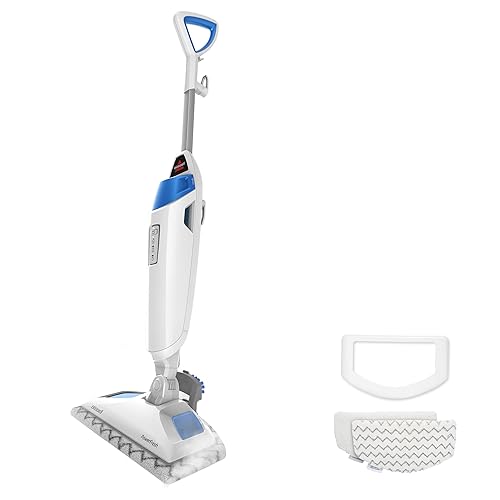
- Fit a clean, damp microfiber pad. Dry pads spread less steam and can leave streaks.
- Set the steam output to a medium or lower level, and allow the unit to heat fully before you start.
- Make slow, overlapping passes of about 3 to 5 seconds per section, so the steam has time to reach the grout lines.
- Switch to a dry microfiber pad to remove residual moisture and loosened dirt.
- Let the floor air-dry for 20 to 30 minutes, or open a window to speed drying.
Tips for Better Grout Results
The grout line, not the tile face, is where steam does most of its work. Pressing harder or making faster passes rarely helps. Instead, slow down and repeat a section if the grout still looks dull.
| Situation | Suggested approach |
|---|---|
| Light surface dirt | One steam pass with a dry pad follow-up |
| Dingy, grime-filled grout | Pre-treat, brush, then two steam passes |
| Sealed grout in good condition | Lower steam setting, fewer passes |
| Unsealed or crumbling grout | Skip steam and get a professional assessment |
Common Mistakes
- Skipping the sweep, which lets grit scratch the tile and grout.
- Using a dry or dirty pad, which spreads grime back into the lines.
- Overlapping the steam setting too high on unsealed grout.
- Letting moisture sit on the floor, which can cause haze or swelling.
- Assuming steam replaces a deep grout cleaning. Heavy staining often needs a dedicated grout cleaner.
For more on how steam compares with other floor surfaces, see Steam Mop Surface Compatibility: Laminate, Tile, Sealed Wood and More. If you want a tile-specific walkthrough, Steam Cleaner to Clean Tile Grout: A Step-by-Step Guide for Better Results covers additional setup details. Keeping your equipment in good shape also matters, so review Cleaning a Steam Cleaner: A Step-by-Step Guide to Keep It Working.
Recommended gear
A stiff nylon grout brush helps lift dirt from the lines before steam goes to work. It reaches narrow joints that a mop head cannot. View on Amazon
Washable microfiber pads are designed to hold moisture and trap loosened grime. Keeping a few on hand lets you swap out a dirty pad mid-job. View on Amazon
A pH-neutral tile cleaner is gentler on sealed grout than harsh alkaline products. Use it for pre-treating spots before steaming. View on Amazon
FAQ
Can a steam mop remove grout stains?
Steam can loosen surface dirt and light staining, but deep or set-in stains usually need a targeted grout cleaner. Test any product on a small area first.
How often should I steam grout?
Many households steam tile floors once a week in high-traffic areas and less often elsewhere. Adjust based on how quickly the grout darkens.
Is steam safe for sealed grout?
Sealed grout generally tolerates steam at a medium setting. Confirm with the sealer’s instructions, and consult a professional if the seal looks worn.
Conclusion
Steam mop grout cleaning works best as a regular maintenance step, not a one-time fix for heavy grime. Sweep first, use a clean pad, and keep your passes slow and overlapping. Check your tile and grout type before you begin, and save a professional for damaged or unsealed grout.
Related reading
- Steam Mops for Floor Cleaning: How to Use One Safely (2026)
- Steam Cleaner for Grout Cleaning: A Step-by-Step Guide for Clean Tile Lines
Ready to choose one?
About Owen Palmer
Owen Palmer is part of our editorial team and reviews and edits our non-vacuum cleaning gear guides, checking product details against manufacturer specifications and owner feedback.




Write Your Review
No reviews yet. Be the first to share your experience!