 By Graham Fisher
Updated November 2026
A spin mop scrub head is a hard-bristle attachment that swaps in for a standard microfiber spin mop pad, giving you a stiffer, more abrasive surface for stuck-on grime. This review looks at the Scrubber Mop Head for Ocedar, a scrub brush attachment sold for EasyWring 1-Tank style spin mop systems. It suits people who deal with grout lines, sticky kitchen floors, bathroom tile, or outdoor deck boards and find that ordinary microfiber leaves residue behind. It is less useful for households mostly dealing with light daily dust on hardwood or laminate, where a soft microfiber pad does the job without the risk of scratching a finish. Buyers with delicate floors or who want a single pad for everything should look at the alternatives covered below.

Scrubber Mop Head for Ocedar, Upgrade Scrub Brush for Ocedar, Spin Mop Scrub Brush Head for Oceda EasyWring 1-Tank, More Bristles Scrub Brush Attachment for Bathroom, Deck, Kitchen Floor Cleaning
Product Overview
This product is a replacement scrub brush head designed to fit the O-Cedar EasyWring 1-Tank spin mop system. Instead of the soft, looped microfiber most spin mops ship with, it uses a rigid bristle face meant to loosen dried spills, scuffs, and sticky residue on hard surfaces. The listing describes it as an upgrade with more bristles than a standard scrub attachment, aimed at bathrooms, decks, and kitchen floors.
The head is intended for use on sealed, hard floors such as tile, vinyl, sealed concrete, and similar surfaces. Because the bristles are stiff, the head works best when you pair it with a cleaning solution and apply moderate pressure, then switch back to a regular microfiber head for drying or final wipe-down. Think of it as a targeted tool for the dirtiest jobs rather than an everyday pad.
Key Features & Specifications
The table below lists only the details that the product name confirms. Measurements and materials beyond those are not stated here, so check the listing before buying if you need exact dimensions.
| Feature | Details |
|---|---|
| Product type | Scrub brush attachment (spin mop head) |
| Compatible system | Ocedar EasyWring 1-Tank spin mop |
| Bristle design | Multiple bristle rows for scrubbing |
| Intended surfaces | Bathroom, deck, kitchen floor |
| Use type | Hard-surface scrubbing |
| Replacement role | Swaps in for the standard microfiber pad |
Pros & Cons
Pros
- Stiffer bristles loosen dried-on grime that soft microfiber often skims over.
- Useful for grout-adjacent areas, tub surrounds, and textured outdoor decking.
- Fits the EasyWring 1-Tank system, so you do not need to replace the handle.
- Gives you a dedicated scrubbing option alongside a regular pad, rather than forcing one head to do everything.
Cons
- Not suited to delicate or unsealed floors, where bristles can dull finishes or leave marks.
- Stiff bristles can feel less comfortable and absorb less liquid than microfiber.
- Compatibility is limited to the named EasyWring-style system, so other spin mop brands will not work.
- Owners often report that bristles need occasional rinsing to keep grit from building up in the base.
Performance Analysis
Performance here depends mostly on the job and the floor. On sealed ceramic or porcelain tile in a bathroom, a bristle head applied with a degreasing cleaner tends to lift soap scum and kitchen grease more efficiently than a standard pad. The mechanical action does the work, so you spend less time going over the same spot. On outdoor deck boards, the bristles can reach into grain and texture where microfiber skids across the top.
Owner feedback patterns for scrub heads in general point to a few recurring themes. Users often say the head cleans best when it is pre-wetted and used with a light, circular motion instead of heavy pressure. Many also note that bristles hold moisture differently than microfiber, so they may leave more residue on the floor if you do not wring or switch heads for a final rinse pass. Manufacturers of scrub attachments typically recommend testing on an inconspicuous area first, which is sound advice for any stiff-bristle tool on finished flooring.
Limitations are worth stating plainly. Stiff bristles are not a substitute for a microfiber pad on hardwood, laminate, or any glossy finish, because abrasion can dull the surface over time. Expect to use this head for targeted tasks rather than whole-floor daily cleaning, and plan to rinse it thoroughly after each session to prevent grit from working into the base.
Who Should Buy This Product?
This head makes sense if your floors are sealed hard surfaces and you regularly face stubborn grime. Bathroom owners dealing with soap scum on tile, kitchen cooks with grease near the stove, and anyone with a wooden or composite deck will likely find it useful. It also fits households that already own an EasyWring 1-Tank mop and want a second head for heavy-duty jobs.
You should skip it if your floors are hardwood, laminate, or any finish that scratches easily, or if most of your cleaning is light dusting and everyday spills. People who want one head to handle every surface will be happier with a soft microfiber replacement and a separate tool for scrubbing. If you own a non-EasyWring spin mop, check compatibility before you buy.
Buying Guide
Before you buy any spin mop scrub head, confirm the compatibility. Scrub heads are usually built for a specific spin mop system, so check the model name on your handle and matching listing. Next, match the bristle stiffness to the floor. Stiffer bristles suit tile, grout-adjacent areas, and decking. Softer scrub brushes suit semi-delicate sealed floors. Avoid stiff bristles on anything you would not scrub with a kitchen scouring pad.
Consider how many heads you need. Owners who clean several rooms often keep one microfiber head for general floors and one scrub head for dirtier areas, so swapping takes only a few seconds. Also think about washing. Rinse bristle heads under running water after use and let them air-dry, since trapped grit and moisture can shorten their life.
If this product does not match your needs, two well-known alternatives are worth a look. The first is a three-pack of replacement microfiber heads that are machine washable, a good choice for everyday cleaning across multiple floor types:

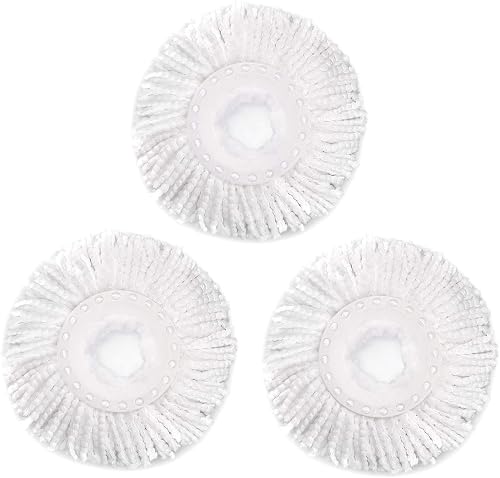
3 Pack Mop Replace Head for Easy Wring 1-Tank System, Easy Cleaning, Microfiber and Machine Washable 40% More Cleaning Power Spin Mop Head Replacement
View on Amazon. The second is a dedicated scrub brush head with hard bristles for tile, bathroom, and kitchen floors, sold as a single pack:

Scrub Brush Head for EasyWring 1-Tank System, Hard Bristle Spin Mop Scrub Brush Attachment for Tile, Bathroom, Kitchen, Deck & Floor Cleaning, 1 Pack
For related reading, see 7 Best Spin Mop Scrub Brush Heads for Clean Floors (2026) for a broader comparison, and Spin Mop Head Washable: How to Clean and Care for Yours (2026) for care tips that apply to any head type.
FAQ
Will a spin mop scrub head scratch hardwood floors?
It can. Stiff bristles are abrasive, and hardwood, laminate, and glossy finishes are easy to dull or mark. Use a soft microfiber head on those floors instead, and test any scrub head on a hidden spot first.
Is this scrub head compatible with all spin mops?
No. It is listed for the O-Cedar EasyWring 1-Tank system. Check your handle model before buying, since heads are rarely interchangeable across brands.
How often should I replace a scrub brush head?
Replacement depends on use and care. When bristles splay, flatten, or lose stiffness, the head is no longer doing its job well. Rinsing after each use and drying fully will extend its life.
Can I use this head with a bleach solution?
Check the cleaning solution guidance from the manufacturer of your spin mop. Strong chemicals can degrade plastic bases and bristle anchors over time, so dilute them as directed and rinse well afterward.
Should I use it wet or dry?
Most owners report better results when the head is pre-wetted with cleaner or water. Dry use can scratch and spread grit around. Wring the head well before each pass to avoid leaving puddles.
Can I use it for outdoor decks?
The listing names deck cleaning as an intended use, and the bristles are better suited to textured outdoor surfaces than microfiber. Rinse the area afterward and check for any residue left in the grain.
Is this a replacement for a regular mop head?
Not entirely. It is best used as a targeted scrubbing tool. For drying, dusting, and light daily cleaning, keep a microfiber head on hand. Many people alternate between the two during a single cleaning session.
Where can I learn how to swap heads?
See How to Replace Mop Head on Spin Mop: A Step-by-Step Guide (2026) for general steps, and Spin Mop Head Removal: A Step-by-Step Guide for Every Model (2026) if your model has a different release mechanism.
Final Verdict
The spin mop scrub head is a useful, specialized tool for sealed hard floors that collect stubborn grime. It earns its place in bathrooms, kitchens, and on outdoor decks, where its stiff bristles do work that soft microfiber cannot. It is not a universal replacement, and it should stay away from delicate finishes. If your needs are mostly tile, decking, and tough kitchen messes and you own a compatible EasyWring system, it is a practical second head to keep handy.
If you have any concern about slip resistance, surface damage, or chemical safety on your specific flooring, check with the flooring manufacturer or a qualified cleaning professional before starting.
Before you buy: helpful guides
About Graham Fisher
Graham Fisher is part of our editorial team and reviews and edits our non-vacuum cleaning gear guides, checking product details against manufacturer specifications and owner feedback.