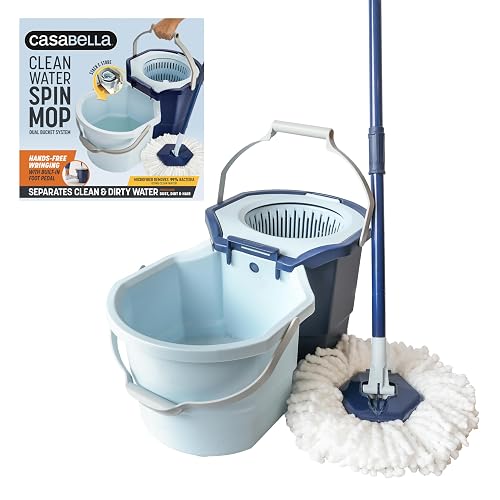
 By Graham Fisher
Updated November 2026
A spin mop head can go in a washing machine, and doing so is one of the fastest ways to get a dirty mop back to working order. Done correctly, a machine wash removes built-up grime, soap residue and odor, and it takes about ten minutes of hands-on work plus a full drying cycle. This guide walks through preparation, washing settings, drying and the common errors that break microfiber heads faster than normal use does.
Before You Start: Check Whether Your Head Is Machine Washable
Not every spin mop head is built the same way. Most replacement heads are made from microfiber loops or cut-pile strands, often sewn onto a plastic or nylon hub. Manufacturers generally specify whether a head is machine washable, and some models are labeled for hand washing only. Check the packaging or the manufacturer’s care instructions before you put anything in the drum.
Shopping for one? See our guide: Top 3 Washing O'Cedar Spin Mop Head Options Compared.
Check for these points before washing:
- A care label or printed instruction on the head or packaging that says machine washable.
- No separate plastic parts that the machine could crack, such as a clip-on pad frame that is not meant to be submerged.
- No loose stitching, frayed edges or torn loops that will pull further in the wash.
If the manufacturer says hand wash only, follow that. Machine washing can still be done on many heads, but a head with a warning label has been designed around a narrower set of conditions, and ignoring the label is how heads get ruined.
What You Need to Wash a Spin Mop Head in the Machine
Gather these supplies before you start so you are not stopping mid-cycle:
- The spin mop head, removed from the handle.
- A mesh laundry bag, ideally a fine-mesh bag that holds the head and keeps loops from catching on the drum.
- A mild liquid laundry detergent, or a dedicated floor cleaner diluted as the manufacturer directs.
- A stiff brush or an old toothbrush for pre-treating stains and caked-on debris.
- Clean towels or a drying rack with airflow on all sides.
Avoid fabric softener and dryer sheets. Both coat microfiber fibers and reduce their ability to grab dust and water, which is the main reason a mop head works.
Step-by-Step: How to Wash the Head in a Washing Machine
Step 1: Remove Loose Debris
Shake the head outdoors or over a trash bin to dislodge hair, grit and lint. Then use your fingers or a brush to pull apart matted sections. Hair wrapped around the hub will work its way deeper into the head during the wash if you skip this step.
Step 2: Pre-Treat Heavy Soil
If the head has greasy residue or dried floor finish, apply a small amount of detergent directly to the affected area and work it in with a brush. Let it sit for five to ten minutes before bagging the head. Pre-treating keeps stains from setting during the main cycle.
Step 3: Bag the Head
Place the head in the mesh bag and close it. The bag protects the loops from snagging on the drum and from getting tangled with other laundry. Wash the head by itself or with other microfiber items, but do not wash it with towels that shed lint or with heavy items like jeans and zippered garments.
Step 4: Set the Machine
Use these settings as a starting point:
| Setting | Recommended choice | Reason |
|---|---|---|
| Water temperature | Cold or warm | Hot water can damage synthetic fibers and hubs. |
| Cycle | Gentle or delicate | Reduces friction and tangling. |
| Spin speed | Low to medium | High spin can deform the hub and strain the stitching. |
| Detergent | Small, measured amount | Excess soap leaves residue that makes floors streaky. |
| Fabric softener | None | Coats fibers and reduces absorbency. |
Use only a small amount of detergent. Most owners find that a standard dose for a single small load is more than enough, and a second rinse cycle often removes leftover soap that would otherwise attract dirt.
Step 5: Rinse Thoroughly
If your machine allows, add an extra rinse. Soap left in the loops is the most common cause of a sticky, dull-looking mop head after drying.
Step 6: Remove Excess Water
Remove the bag as soon as the cycle ends. Press the head gently against the inside of the drum or squeeze sections by hand. Avoid wringing it hard, which can twist the hub and pull loops loose.
Drying the Spin Mop Head Correctly
Drying is where many heads are damaged. Do not put a microfiber head in the dryer unless the manufacturer explicitly says it is safe. High heat can melt synthetic fibers, warp plastic hubs and leave the loops stiff.
- Air dry the head by hanging it from the hub or laying it flat on a towel with the loops fanned out.
- Keep the head out of direct sunlight for long periods, since UV exposure can make some fibers brittle over time.
- Allow at least several hours for full drying. A head that feels dry on the surface can still hold moisture near the hub, and that trapped moisture encourages mildew.
- Store the head only after it is completely dry.
Tips for Better Results
- Wash the head after every few uses, or sooner if it has picked up grease or pet hair.
- Keep a dedicated cleaning bag so you can wash the head without mixing it with household laundry.
- Replace the head when the loops are matted, torn or no longer hold water. A worn head will streak no matter how well you wash it.
- Rinse the head under running water between washes if you only need a light refresh.
Common Mistakes to Avoid
- Washing with fabric softener. It coats the fibers and reduces their cleaning power.
- Using hot water. Heat warps hubs and can break down synthetic loops.
- Skipping the bag. Loops catch on the drum, tear and tangle.
- Drying in a hot dryer. Heat is the most common cause of premature damage.
- Putting the head away damp. Trapped moisture leads to odor and mildew.
- Ignoring the care label. Hand-wash-only heads will not survive the drum.
Recommended gear
A fine mesh laundry bag is the single most useful accessory for this job, because it keeps loops from snagging on the drum and makes it easy to move the head in and out of the machine. Look for a bag labeled for delicates or lingerie, since the finer mesh holds the loops more securely.
A soft-bristle detail brush helps you loosen hair and debris from the hub before washing. A stiff brush can damage loops, so choose one with flexible bristles.
A mild, dye-free liquid laundry detergent is a good fit for microfiber and synthetic fibers because it rinses cleanly and leaves little residue. Avoid heavily scented formulas that can cling to the loops.
A drying rack with open slats lets air reach the hub and loops from every side, which shortens drying time and reduces the risk of mildew.
FAQ
Can I put any spin mop head in the washing machine?
Many replacement heads are machine washable, but not all. Check the care label or manufacturer instructions first. If the label says hand wash only, follow that.
What water temperature should I use?
Cold or warm water is the safe choice. Hot water can warp plastic hubs and damage synthetic fibers.
Should I use fabric softener?
No. Fabric softener coats microfiber and reduces its ability to absorb water and trap dust.
Can I dry the head in the dryer?
Only if the manufacturer says it is safe, and even then use the lowest heat setting. Air drying is the safer choice for most heads.
How often should I wash my spin mop head?
Wash it after every few uses, or sooner if it has picked up grease, pet hair or heavy soil. A regular wash schedule keeps the head performing well for longer.
Why does my mop head look dull or streaky after washing?
Leftover detergent or fabric softener is the usual cause. Run an extra rinse cycle and avoid softeners in future washes.
How do I know when to replace the head?
Replace the head when the loops are matted, torn or no longer absorb water well, or when it leaves streaks even after a proper wash.
Will washing the head shorten its life?
Gentle washing with cold water, mild detergent and air drying will not shorten life noticeably. Harsh cycles, hot water and high-heat drying are what wear heads out.
Conclusion
Washing a spin mop head in a washing machine works well when you check the care label, bag the head, use cold or warm water on a gentle cycle and skip fabric softener. Air drying completely before storage is just as important as the wash itself. Follow these steps and the head will clean better and last longer.
Related reading
- How to Wash Spin Mop Head in Washing Machine: A Step-by-Step Guide
- Spin Mop Head Washable: How to Clean and Care for Yours (2026)
- Spin Mop Head Removal: A Step-by-Step Guide for Every Model (2026)
- Spin Mop Handle and Head: How to Assemble, Match and Replace Them (2026)
- Round Spin Mop Head Replacement: 5 Best Picks for Every Floor (2026)
- Removing Mop Head From Spin Mop: Step-by-Step for Every Model (2026)
- O-Cedar Spin Mop Attachments: Which Heads Fit Your Floors (2026)
- O-Cedar Spin Mop Accessories: Which Heads and Parts Fit Your Floors (2026)
Ready to choose one?
About Graham Fisher
Graham Fisher is part of our editorial team and reviews and edits our non-vacuum cleaning gear guides, checking product details against manufacturer specifications and owner feedback.