 By Claire Whitaker
Dust in a home carries dust mite allergens, one of the asthma triggers the EPA asks families to control. Feather and lambswool dusters are common, but the public health guidance on dusting focuses on two things: microfiber cloths and mops, and dusting with a damp cloth. This guide compares those methods with plain cotton, using a UCSF Western States PEHSU fact sheet, a UConn Health green cleaning program and the EPA’s asthma trigger guidance, and covers how to wash microfiber so it keeps working.
How microfiber works
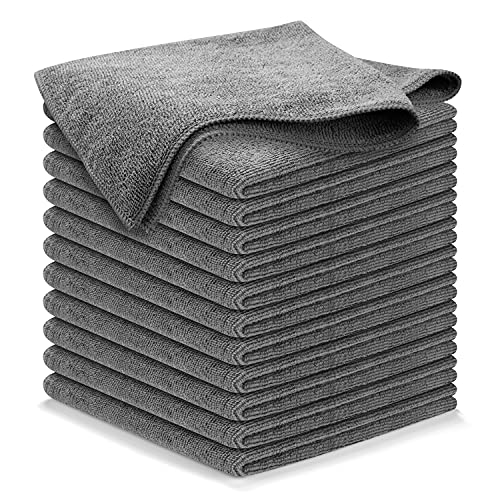
Microfiber used for cleaning is a synthetic material, typically a blend of polyester and nylon, that is split into strands far thinner than a human hair. According to the UCSF Western States PEHSU, split microfibers are 200 times thinner than a single human hair. A microfiber cloth has the same surface area as a cotton cloth four times its size, and it can absorb up to seven times its weight in water. UConn Health notes that ultra-fine microfiber with a denier measurement of 0.13 is preferred, and the star-shaped fibers enable absorption of up to 7 to 8 times their weight in liquid.
UCSF adds that microfiber products are positively charged, which means they attract negatively charged dirt and grease. The UCSF fact sheet explains that the combination of more surface area and a positive charge allows microfiber to remove organic matter and germs effectively.
Microfiber vs. cotton for dusting
The UCSF PEHSU states that a microfiber mop head used with a detergent cleaner removed bacteria as effectively as a cotton mop head used with a disinfectant. UConn Health cites a study from the University of California, Davis Medical Center where a cotton-loop mop reduced bacteria on floors by 30%, while a microfiber mop reduced bacteria by 99%. For dusting, the UCSF fact sheet says microfiber cloths and mops trap much more dust than cotton rags, making the job faster and easier.
UCSF also notes that, unlike cotton, microfiber dries fast, which makes it hard for bacteria to grow in it. UConn Health reports that a University of Massachusetts Lowell study found microfiber mop systems cut the risk of worker injury through two factors: reduced weight and no wringing.
Damp dusting and asthma triggers
The EPA’s guidance on controlling asthma triggers emphasizes dusting with a damp cloth to reduce household dust. The EPA says every home has dust mites, that they feed on human skin flakes, and that they are found in mattresses, pillows, carpets, upholstered furniture, bedcovers, stuffed toys and fabric-covered items. The EPA recommends washing bedding weekly in hot water, using dust-proof covers on pillows and mattresses, and vacuuming carpets and furniture every week, using a vacuum with a HEPA filter.
The EPA also advises vacuuming when the person with asthma is not around and using an air cleaner with a HEPA filter. You can pair damp microfiber dusting with a HEPA vacuum to manage dust on floors and fabric surfaces. The agency also suggests choosing stuffed toys that can be washed and dried completely, and keeping pets off furniture and out of the bedroom of the person with asthma.
How to use and care for microfiber dusters
To get the most out of microfiber cloths and mop heads, follow a few simple laundry rules. Both UCSF and UConn Health stress that microfiber should be washed separately from other laundry because its static charge attracts lint, hair, and dirt from other fabrics, which reduces its effectiveness. UConn Health recommends a mild laundry detergent. Both say not to use fabric softener; UCSF explains that fabric softeners contain oils that clog the microfibers. Bleach should also be avoided because it shortens the lifespan of the material.
Heavily soiled cloths can be washed in warm or hot water, while lightly soiled ones can be washed in cold or on a gentle cycle. UCSF says microfiber dries very fast, so plan on a short laundry cycle, or hang items to dry. UConn Health says microfiber can be line dried, and if an automatic dryer is used, the setting should always be low. The UCSF fact sheet notes that microfiber can be washed up to a thousand times before losing its effectiveness, making it a durable and reusable option. UCSF says to clean microfiber cloths after every use, and both UCSF and UConn Health describe color-coding cloths for different areas.
Comparison of dusting methods
The table below summarizes the dusting approaches the EPA, UCSF and UConn Health describe. Feather and lambswool dusters are left out because none of them discuss those tools.
| Method | What it does | Source |
|---|---|---|
| Microfiber cloth or mop | Split fibers and a positive charge attract dirt and grease; traps much more dust than cotton rags. | UCSF PEHSU |
| Damp cloth | The EPA recommends dusting often with a damp cloth as part of controlling dust mite triggers. | EPA |
| Cotton cloth (dry) | UCSF says microfiber cloths and mops trap much more dust than cotton rags. | UCSF PEHSU |
| Cotton cloth or mop | Unlike microfiber, cotton does not dry fast, per UCSF; in a UC Davis Medical Center comparison cited by UConn Health, a cotton-loop mop reduced floor bacteria by 30%, a microfiber mop by 99%. | UCSF PEHSU, UConn Health |
Frequently asked questions
Can I use a feather duster instead of microfiber?
The EPA, UCSF and UConn Health do not discuss feather dusters, so this guide makes no claim about how well they work. What they do recommend is dusting with a damp cloth (EPA) and using microfiber, which UCSF says traps much more dust than cotton rags.
How often should I wash microfiber cloths?
The UCSF PEHSU says to clean microfiber cleaning cloths after every use and to wash and dry them separately from other laundry. UConn Health adds that changing mop pads after each room reduces the chance of spreading microbes from one room to another.
Do I need to use cleaning chemicals with microfiber?
The UCSF fact sheet describes washing windows with just one microfiber cloth and water and drying with another, and says microfiber can be used on counters and stovetops with a third-party certified all-purpose cleaner. Follow the care instructions for your own cloths.
For more on dusting tools and other cleaning equipment, see our cleaning tools guides. You may also find our articles on microfiber cloth types and care, brooms and dustpans, extendable cleaning poles, and vacuum cleaners with HEPA filters helpful.
Sources
- UCSF Western States PEHSU: Green Cleaning Toolkit Fact Sheet, Microfiber
- UConn Health: A Green Cleaning Program for Connecticut Facilities
- EPA: Asthma Triggers, Gain Control
- EPA: Asthma Triggers infographic
About Claire Whitaker
Claire Whitaker is part of our editorial team and reviews and edits our non-vacuum cleaning gear guides, checking product details against manufacturer specifications and owner feedback.