 By Graham Fisher
Updated November 2026
A spin mop vs Swiffer comparison comes down to how much you want to touch dirty water and how much cleaning power you need. A spin mop with a bucket and wringer suits people who mop regularly, have hard floors that get tracked-in dirt, and want to control how wet the head is. A Swiffer-style dry or wet sweeper suits quick, low-effort tidying, especially for small spaces or people who want to avoid buckets entirely. The rest of this guide breaks the two down by the criteria that actually affect daily use.
| Criterion | Spin Mop | Swiffer (Sweeper) |
|---|---|---|
| Cleaning power on sticky or dried spills | Better, with a damp head and a scrubbing motion | Limited, works best on light dust and fresh spills |
| Moisture control | Adjustable by wringing the head | Pre-moistened pads, little control |
| Mess and handling | Requires a bucket and rinsing | Disposable pads, minimal contact with water |
| Ongoing refill approach | Reusable microfiber heads, washable | Disposable pads or refills after each use |
| Setup and storage | Bucket and wringer take more floor and cabinet space | Compact, lightweight, easy to store |
| Best floor types | Sealed hard floors, vinyl, tile, sealed hardwood | Quick touch-ups on sealed hard floors and laminate |
| Speed for a small room | Slower, more steps | Faster for a quick pass |
Cleaning Power: Which Removes More Dirt?
For cleaning power, the spin mop wins. Its microfiber head can be dampened to a controlled level and scrubbed back and forth, which lifts grit, sticky residue, and dried footprints more effectively than a dry-to-damp sweeper pad. Owners often report that a spin mop handles kitchen floors after cooking splatters better, mainly because the head is larger, holds more cleaning solution, and gets more mechanical contact with the surface.
A Swiffer-style sweeper is strong at picking up loose debris: hair, crumbs, pet fur, and light dust. Its pads are designed to grab and hold that material. Where it falls short is on anything that has bonded to the floor. Dried sauce, sticky drinks, and grime in grout lines usually need a second pass or a different tool entirely.
Winner for cleaning power: Spin mop.
Moisture Control and Floor Safety
Moisture is where the two tools differ most in how they treat your floor. A spin mop lets you set the head’s wetness by wringing it through the built-in basket. A common approach is to wring until the head is damp but not dripping, roughly the feel of a well-wrung sponge. Too much water can seep into seams, soften laminate, or leave a film on vinyl. Manufacturers of hardwood and laminate generally advise minimal moisture for this reason.
Swiffer-style wet pads are pre-moistened and sealed, so you cannot adjust the wetness. That is convenient, and the pads are designed to be light on floors, but you have less control if a floor needs a damper or drier pass. Dry-sweeping pads avoid moisture entirely, which is useful for laminate or unsealed wood.
Winner for moisture control: Spin mop. If you want the simplest, least-wet option for delicate floors, a Swiffer-style dry sweep is the safer choice for quick dust removal. Check your floor manufacturer’s care guide before using either tool with heavy liquid.
Mess, Handling, and Ease of Use
The Swiffer wins on ease. There is no bucket to fill, no wringing, and no rinse water to dump. You attach a pad, sweep, and throw the pad away. For people who hate touching wet mop heads or emptying dirty water, that simplicity is the main reason they buy one.
A spin mop involves more steps: filling the bucket, dipping the head, wringing, mopping, and rinsing the head afterward. The good news is that most of the work is quick once you have a routine. Our guide to spin mop and pail use covers a workflow that keeps the rinse water clean and the head fresh. Note that the bucket and wringer take up a fair amount of floor space and need somewhere to dry.
Winner for ease of use: Swiffer.
Ongoing Cost of Refills and Replacement
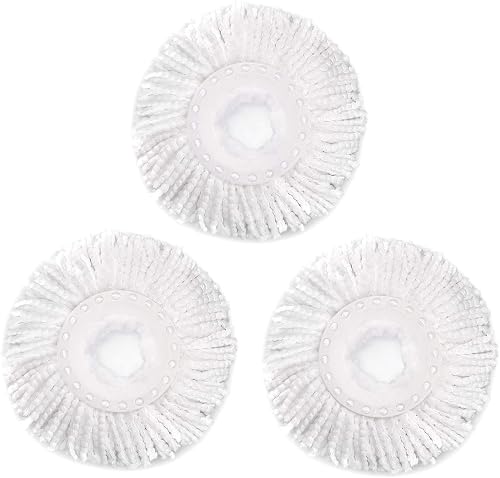
Here the two systems work on very different models. A spin mop uses washable microfiber heads that can be laundered and reused many times. Owners often report replacing the head only after it frays, stops holding water well, or loses its shape. Replacement heads are sold separately, and the handle usually lasts much longer than the head.
A Swiffer-style system uses disposable pads or refills, so you keep buying them as you clean. That adds up over months, especially in a busy home. Some people use the reusable-pad options offered for Swiffer-style frames, which cuts down on waste, though the sealed pre-moistened pads are not designed to be washed.
Winner for long-term refill approach: Spin mop. Its washable heads suit anyone who wants to keep disposables out of the trash.
Storage and Space
A Swiffer-style sweeper is light, slim, and can lean in a closet or hang on a hook. It is a good fit for apartments, small kitchens, and quick grab-and-go cleaning. A spin mop needs its bucket and wringer stored, and the wet head needs air to dry so it does not smell. If you have limited closet space, this is a real factor. You may also like Steam Mop or Spin Mop (2026): Which Is Better for Your Floors?.
Winner for storage: Swiffer.
Best Floor Types for Each Tool
Spin mops perform best on sealed hard floors: vinyl, ceramic and porcelain tile, sealed hardwood, and sealed stone. Their wet-but-wrung head can scrub these surfaces well when used with a manufacturer-approved floor cleaner. Avoid soaking unsealed wood, and never let standing water sit on any floor.
Swiffer-style sweepers and their pads are good for light cleaning on sealed hard floors and laminate, especially for everyday dust, pet hair, and crumbs. Dry pads are the better choice for laminate and unsealed wood, while damp pads are better suited to sealed tile and vinyl. Carpet is generally outside the scope of either tool. If you need carpet cleaning, a dedicated carpet cleaner is a better fit.
Winner for floor versatility: Spin mop on sealed hard floors that need real scrubbing. Swiffer for light, daily maintenance across mixed surfaces.
Which Should You Choose?
- Choose a spin mop if you mop sealed tile, vinyl, or hardwood weekly, have sticky kitchen spills, and want reusable heads.
- Choose a Swiffer-style sweeper if you mostly need quick pick-up of dust, hair, and crumbs, and you dislike buckets.
- Choose a spin mop if you have pets that track in mud or you want more control over moisture on hard floors.
- Choose a Swiffer-style sweeper if you live in a small apartment or have little storage space.
- Choose a Swiffer-style dry sweeper if you have unsealed or laminate floors that you want to keep dry.
- Use both if you want a quick daily sweep plus a deeper weekly scrub. Many households do exactly this.
For a spin option, consider the O-Cedar Spin Mop or the Libman Spin Mop Bucket Set. For a Swiffer-style sweeper, the Swiffer Sweeper Dry and Wet Mop Starter Kit is a common starting point. Browse the options here: View on Amazon, View on Amazon.
If you are deciding between spin styles first, our comparison of Spin Mop vs Flat Mop (2026): Which Is Better for Your Floors? explains how head shape changes results. If you are comparing wet-cleaning options, Spin Mop vs Steam Mop (2026): Which Is Better for Your Floors? covers a different trade-off between water and heat.
FAQ
Is a spin mop better than a Swiffer for hardwood floors?
It depends on the finish. Sealed hardwood tolerates a damp spin mop head when wrung well, but unsealed or heavily worn wood should get only a barely damp pass or a dry sweep. Check your flooring manufacturer’s cleaning instructions before using either tool. You may also like Roller Mop vs Spin Mop (2026): Which Is Better for Your Floors?.
Do Swiffer pads actually clean, or just move dust around?
Dry pads trap light dust, hair, and crumbs well. They are less effective on sticky residue and dried spills. Wet pads help with light grime, but for dried or bonded dirt, a damp spin mop head with a scrubbing motion usually does more.
Can I use a spin mop on laminate?
Many laminate manufacturers advise against standing water. A spin mop can be used if the head is wrung very dry and you move quickly. Many people prefer a dry sweeper for laminate day to day and reserve a damp spin pass for occasional cleaning.
Which is cheaper to use over time?
A spin mop generally costs less over time because its microfiber heads are washable and reusable. A Swiffer-style system adds up because pads are disposable, though reusable pad options exist for some frames.
Is a spin mop or Swiffer better for pet owners?
For pet hair and loose debris, a Swiffer-style dry sweeper is quick and effective. For muddy paw prints and tracked-in dirt, a damp spin mop head does a better job. Many pet owners use a sweeper daily and a spin mop weekly.
Conclusion
The spin mop vs Swiffer question has a clear answer once you know your priorities. The spin mop wins on cleaning power, moisture control, and long-term reuse, which makes it the better choice for sealed hard floors that need real scrubbing. The Swiffer wins on ease, storage, and speed for light daily cleaning. If your floors need both quick upkeep and occasional deep cleaning, pairing the two is a practical approach. For a broader view of wet-cleaning options, the Spin Mop vs Steam Mop comparison is a useful next step.
Related reading
- O-Cedar vs Libman Spin Mop (2026): Which Is Better for Hard Floors?
- O-Cedar Spin Mop Easy Wring vs Rinse Clean: 3 Best Picks Compared
- O-Cedar Flat Mop vs Spin Mop: Which Should You Choose?
- Cuban Mop vs Spin Mop: Which Is Better for Your Floors?
- Where to Buy Spin Mop: 5 Places to Find the Right One (2026)
About Graham Fisher
Graham Fisher is part of our editorial team and reviews and edits our non-vacuum cleaning gear guides, checking product details against manufacturer specifications and owner feedback.