 By Graham Fisher
Updated November 2026
A roller mop and a spin mop both clean hard floors with a microfiber or cotton head, but they remove water in very different ways. A roller mop uses a pair of rollers that press liquid out of the head as you pull the handle through a bucket, so you never need to touch the mop. A spin mop uses a basket and a pedal or crank to spin water out of the head. If you want a fast, hands-off wring and a wider cleaning path on tile, vinyl or sealed wood, the roller mop usually wins. If you want a compact setup, simple heads you can swap, and a lower-effort path to a fairly dry floor, the spin mop is the better match.
| Criterion | Roller Mop | Spin Mop |
|---|---|---|
| How it removes water | Two rollers squeeze the head as you pull the handle up through the bucket | A basket spins the head dry via a pedal or crank |
| Hands-on contact with dirty water | Minimal, the rollers do the work | Minimal, the head stays in the basket while spinning |
| Typical head width | Often wider, which covers more floor per pass | Usually a compact, round or square head |
| Moisture left on floor | Damp, depends on how hard you squeeze the head | Relatively dry when spun thoroughly |
| Corners and edges | Harder to reach along baseboards | Easier to work into tight spots |
| Head replacement | Often sold as a matched set with the roller frame | Replacement heads are widely available |
| Best floor fit | Large open tile, vinyl, sealed wood | Kitchens, bathrooms, mixed rooms with furniture |
How Each Mop Removes Water: Which Wrings Better?
Water removal is where these two designs differ most. A roller mop wrings the head by pulling it between two rollers that compress the fabric. Owners often report that the head comes out damp but not dripping, which is what you want for a quick pass. The amount of moisture left depends on how many times you run the head through the rollers and how thick the microfiber is. A thin, well-worn head will squeeze out more readily than a thick new one.
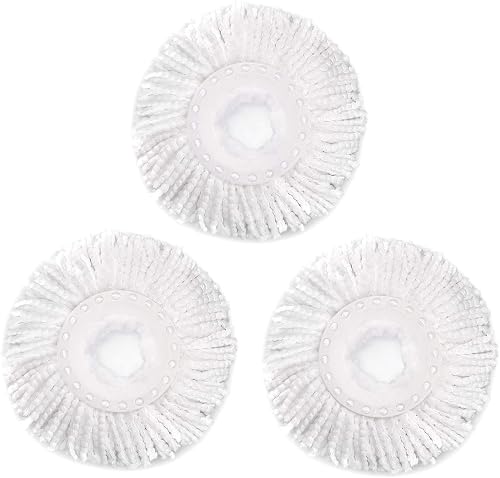
A spin mop works differently. You place the head in a basket inside a bucket, then press a pedal or turn a crank to spin it. Centrifugal force throws water out of the fibers, and most people find the head noticeably drier after a few seconds of spinning. Manufacturers usually recommend spinning until the water stops dripping from the basket, which typically means a short but firm press on the pedal.
Winner for water removal: Spin mop. The head leaves the bucket drier and gives you more control over how wet your floor gets, which matters on laminate and sealed wood where standing water can cause swelling at seams.
Floor Coverage and Efficiency: Which Cleans Faster?
Roller mops often come with a broad head, so each stroke covers more floor. On a large open area like a living room or hallway, this can save time. Because the head is held in a frame that you pull across the floor, you also tend to work in longer, more even strokes. The trade-off is that the wide head can be awkward in narrow rooms and around furniture legs.
Spin mops usually have a smaller head, often a few inches across, which makes the mop easier to maneuver in kitchens and bathrooms. You will need more strokes to cover the same floor, but the mop goes under cabinets and around toilets more easily. Many spin mop owners pair the mop with a squeegee or dry pass to pick up residual water.
Winner for coverage speed: Roller mop in open rooms. Winner for tight spaces: Spin mop. If most of your floor is open, the roller mop saves real time. If your floor is broken up by cabinets and islands, the spin mop is easier to control.
Hands-Off Cleaning and Ergonomics: Which Is Easier on Your Back?
Both designs keep your hands away from dirty water, but the mechanics differ. A roller mop asks you to pull the handle up through the bucket and press it down onto the rollers. This motion is simple, though some users find the repeated lift tiring over a long session. Bending to position the bucket can add strain if the bucket is low.
A spin mop has you press a pedal with your foot or turn a crank with one hand. Many users find this less tiring than repeated lifting, although the pedal action takes a little practice to get a steady rhythm. Because the head sits in a basket, you rarely need to lean over the bucket.
Winner for ease of use: Spin mop, especially for people who have trouble with lifting or repetitive motion. Roller mops are still easy to operate once you learn the pull-up rhythm.
Maintenance and Head Replacement: Which Is Cheaper to Keep Running?
Replacement heads are a regular cost of ownership with either mop. Roller mop heads are often tied to a specific frame, so you will usually buy replacements from the same manufacturer. Spin mops have a larger market of compatible heads, and many owners report finding replacements in several brands and materials. If you want flexibility in what you buy, the spin mop tends to be easier to supply.
Cleaning the head is similar for both. Rinse the microfiber after each use, wash it on a gentle cycle without fabric softener, and air dry. Fabric softener coats the fibers and reduces absorbency, which is a common complaint with any microfiber mop. Some heads can be laundered many times before they start to shed or lose their grip on dirt.
For a deeper look at keeping a spin mop head in good shape, see Spin Mop Head Washable: How to Clean and Care for Yours (2026). If you are weighing whether a spin mop even fits your situation, Spin Mop vs Flat Mop (2026): Which Is Better for Your Floors? covers the head-shape differences in detail.
Winner for replacement flexibility: Spin mop. Roller mop owners can still keep their mop going for years with regular washing, but the spin mop has a wider range of compatible replacements.
Sanitation and Hygiene: Which Keeps Dirty Water Out of the Way?
Both mops can spread dirt if the bucket water gets too dirty. The main difference is how the water gets wrung out. Roller mops push water back into the bucket through the rollers, so dirty liquid can sometimes splash if the rollers are not positioned well. Spin mops hold the head in a closed basket, which keeps spinning water contained more neatly.
For either mop, change the water when it looks cloudy, usually after cleaning a room or two. Use two buckets if you can, one for clean solution and one for rinsing, which keeps the cleaning solution fresher for longer. A small amount of cleaner per gallon is usually enough, and more is not better because residue can leave a dull film.
Winner for containment: Spin mop. The enclosed basket reduces splashing, though both designs work well when you change water often.
Which Should You Choose?
- Choose a roller mop if you clean large open rooms with tile, vinyl or sealed wood and want to cover ground quickly.
- Choose a roller mop if you prefer a wider head and do not mind a slightly damper finish that dries fast on hard floors.
- Choose a spin mop if your home has many corners, cabinets and islands, such as a kitchen or bathroom-heavy layout.
- Choose a spin mop if you want a drier head and more control over moisture on laminate or wood.
- Choose a spin mop if you want easy access to replacement heads from several brands.
- Choose a spin mop if repeated lifting bothers your shoulders or back, since the pedal action is usually gentler.
If you are still deciding between a spin mop and other styles, Spin Mop vs Steam Mop (2026): Which Is Better for Your Floors? compares the two when sanitizing is a priority. Once you have picked a type, The Ultimate Spin Mop: 5 Best Options Compared for Clean Floors (2026) walks through several models in detail.
Product Options
For a roller-style option, the Libman Freedom Roller Mop is a commonly sold model that uses a roller wringer and a wide head. Owners often report that it works well on tile and vinyl. View on Amazon
For a spin-style option, the O-Cedar EasyWring Microfiber Spin Mop is widely available and uses a pedal-operated basket. Manufacturers specify that the head should be spun until it stops dripping for best results. View on Amazon
If you are shopping for a specific spin setup, O-Cedar vs Libman Spin Mop (2026): Which Is Better for Hard Floors? compares two of the most common brands side by side.
FAQ
Is a roller mop better than a spin mop for hardwood floors?
Not necessarily. Both can work on sealed hardwood, but the key is how wet the head is. A spin mop usually leaves a drier head, which lowers the risk of water seeping into seams. A roller mop can also work if you wring it firmly and avoid over-wetting the floor.
Do roller mops leave streaks?
They can if the head is too wet or the cleaning solution is too strong. Owners often report fewer streaks when they use a light cleaner, change the water often and do a quick dry pass with a clean, dry section of the head.
Can I use a spin mop on tile grout?
Yes, though a spin mop head will not scrub deep grout lines on its own. For heavily soiled grout, use a stiff brush first, then mop the surface. Test any cleaner on a small hidden area first, since some grout sealers can react to strong products.
How often should I replace the mop head?
Replacement depends on use and washing. Many microfiber heads start to lose absorbency or shed after many wash cycles. When the head no longer picks up water well or leaves visible lint, it is time for a new one.
Is a roller mop safe for pets and homes with allergies?
Both mops can help reduce dust and pet hair on hard floors when used with a damp microfiber head. For households with allergies or pets, a spin mop with a fresh head at each cleaning can be a practical choice. If someone in your home has a medical condition that makes cleaning products a concern, consult a healthcare professional about which cleaners are appropriate.
Conclusion
The roller mop vs spin mop decision comes down to your floor layout and how you prefer to work. A roller mop shines in large open rooms, where its wide head covers ground quickly and the hands-off wringing keeps things tidy. A spin mop is the better all-round tool for kitchens, bathrooms and rooms full of furniture, where its compact head, drier finish and wide range of replacement heads give you more control. Start by measuring your most-used floors and noting how often you need to get into corners, then match the mop to that routine.
Related reading
- O-Cedar Spin Mop Easy Wring vs Rinse Clean: 3 Best Picks Compared
- O-Cedar Flat Mop vs Spin Mop: Which Should You Choose?
- Cuban Mop vs Spin Mop: Which Is Better for Your Floors?
About Graham Fisher
Graham Fisher is part of our editorial team and reviews and edits our non-vacuum cleaning gear guides, checking product details against manufacturer specifications and owner feedback.